AI Customer Journey Analytics: Stop Flying Blind and See Exactly Where Customers Drop Off
Your Google Analytics shows what happened. AI journey analytics shows WHY it happened—and how to fix it. Discover the invisible leaks in your funnel.
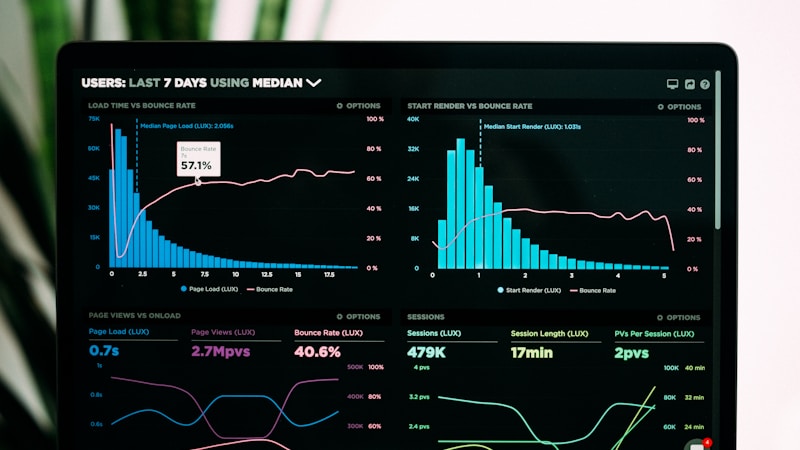
I used to stare at our Google Analytics funnel report and feel a false sense of security. "Look at this!" I'd tell the team. "We have a 12% conversion rate from signup to paid. That's solid!" Then we'd high-five and move on.
But then I started digging deeper. That 12% average masked a brutal reality: 40% of enterprise leads converted, while only 3% of SMB leads did. Our "solid" funnel was actually killing our SMB growth while we celebrated the enterprise wins.
That's the problem with traditional analytics—it shows averages that hide the truth. AI-powered journey analytics doesn't do averages. It shows you every twist, turn, loop, and dead-end in your customers' paths. And once you see it, you can't unsee it.
Why Traditional Analytics Is Lying to You

Let's be honest: Google Analytics, Mixpanel, and their cousins are amazing tools. But they have blind spots that cost you millions in missed revenue:
- They show aggregates: "12% conversion" hides the fact that half your segments are failing
- They miss cross-device journeys: Mobile research → desktop purchase is invisible
- They ignore offline touchpoints: Phone calls, events, in-store visits don't exist
- They use last-click attribution: The real influencers get no credit
- They can't predict: They tell you what happened, not what WILL happen
AI journey analytics changes the game because it processes EVERY touchpoint, connects the dots across devices and channels, and finds patterns that human analysts would take years to spot.
What AI Journey Analytics Reveals (That Humans Miss)
1. The "Almost" Customers
AI identifies customers who took 90% of the journey but dropped off at the last second. These are your highest-value retargeting opportunities. Traditional analytics just marks them as "lost."
2. Hidden Friction Points
You think your checkout is smooth? AI might reveal that 23% of customers visit your pricing page 4+ times before buying—a clear sign of confusion or sticker shock. Or that customers who watch your demo video have 3x higher conversion, but only 12% ever see it.
3. Journey Clustering
Not all customers take the same path. AI finds distinct journey clusters:
- "The Researchers": 14-day journey, 23 touchpoints, high-value
- "The Impulse Buyers": 6-minute journey, 3 touchpoints, lower AOV
- "The Comparison Shoppers": Visit competitors' sites between your touchpoints
- "The Social Discoverers": Instagram → your site → bounce → Instagram → buy
4. Anomaly Detection
AI spots when journeys change suddenly. "Wait, why did conversion drop 40% for mobile users from California in the last 3 days?" You'll find the bug, the broken ad, or the pricing error BEFORE it costs you thousands.
5. Next Best Action Prediction
Instead of looking backward, AI looks forward: "Customers who JUST did X are 78% likely to do Y next. Trigger this message now." It's analytics that automatically activates marketing.
See Your True Customer Journeys
HookPilot's AI journey analytics reveals every path, bottleneck, and opportunity. Stop guessing, start optimizing. Free 14-day trial.
Start Free TrialBuilding Your AI Journey Analytics Stack

Step 1: Data Collection & Unification
You need a "single source of truth" for customer journeys:
- Web & app analytics: Page views, events, conversions
- Marketing platforms: Ad clicks, email opens, social interactions
- CRM & sales: Deal stages, interactions, calls
- Support & success: Tickets, chats, NPS scores
- Offline data: POS systems, call centers, events
Step 2: Identity Stitching
The magic happens when you connect "anonymous visitor #123" to "email@company.com" to "customer #456." AI uses probabilistic matching (IP, device, behavior patterns) and deterministic matching (login events, email clicks) to build complete user profiles.
Step 3: Journey Visualization
Humans can't comprehend millions of journeys. AI visualizes them through:
- Sankey diagrams: Flow visualization showing volumes between touchpoints
- Sunburst charts: Hierarchical view of journey paths
- Heatmaps: Where do journeys cluster or die?
- Cohort analysis: How do journeys change over time?
Step 4: Statistical Analysis
AI runs advanced statistics on your journeys:
- Sequence analysis: Most common paths
- Survival analysis: How long until conversion/churn?
- Attribution modeling: True value of each touchpoint
- Regression analysis: What factors predict conversion?
Step 5: Predictive Modeling
The holy grail: AI predicts future journeys. "This customer has an 84% probability of churning in 12 days based on their current journey pattern. Here's the intervention that works best."
Case Study: How EcomGiant Boosted Revenue 89% with Journey Analytics
EcomGiant, a $50M online retailer, was stuck. They'd optimized their funnel to death—landing pages, cart, checkout—all "best practice." Yet revenue was flat.
The Discovery: AI journey analytics revealed that 34% of customers who abandoned cart later returned... through a Google search for their brand + "coupon code." They were leaving to hunt for discounts, then coming back directly.
The Insight: These customers weren't "lost"—they were just discount-hunting. EcomGiant was paying for Google branded search ads to recapture their own customers!
The Fix:
- Added an exit-intent popup offering 5% off if they stay
- Sent an email 2 hours after cart abandonment with a limited-time discount
- Created a "VIP Early Access" segment for repeat cart abandoners
- Reduced branded search ad spend by 60%
The Results (6 months):
- Cart abandonment: 68% → 51%
- Branded search ad spend: -$340,000/year
- Overall revenue: +89%
- Customer LTV: +42%
- Net profit margin: +18 percentage points
The Lesson: Traditional analytics said "cart abandonment is 68%." AI journey analytics said "34% of those come back after coupon hunting—let's fix THAT."
Advanced Journey Analytics Techniques for 2026
Real-Time Journey Optimization
Don't wait for monthly reports. AI now optimizes journeys in real-time. If a customer is stalling on your pricing page, the AI can trigger a chat, display a testimonial, or offer a case study—all within seconds of detecting the stall.
Cross-Channel Attribution AI
Stop guessing which channel deserves credit. AI attribution models analyze the entire journey and assign fractional credit to each touchpoint based on its true influence. You'll discover that your "worst performing" channel is actually your secret weapon.
Sentiment-Weighted Journeys
Combine journey data with sentiment analysis. A customer who visits 20 pages with positive sentiment is different from one who visits 20 pages with frustrated sentiment. The AI routes them differently.
Competitive Journey Hijacking
AI can analyze (via third-party data) where your customers go AFTER they leave you without converting. If they're going to Competitor X, that tells you exactly what you're missing.
Quick Win: The 2-Hour Journey Audit
Want to find journey leaks fast? Do this:
- Pick your most important conversion goal (purchase, signup, etc.)
- Look at the last 3 touchpoints before conversion
- Now look at the last 3 touchpoints before ABANDONMENT
- What's different? That's your leak.
- Fix it today.
Result: Immediate lift in conversions from existing traffic.
Common Journey Analytics Mistakes
1. Vanity Metrics Obsession
"We have 50,000 visitors!" Great, but how many converted? How many returned? How many told a friend? Focus on journey-based metrics, not traffic vanity metrics.
2. Ignoring Micro-Conversions
A video view, a PDF download, a pricing page visit—these are journey progress signals. Ignoring them is like ignoring pit stops in a race. They tell you who's serious.
3. Analysis Paralysis
With AI, you CAN analyze everything. But you SHOULDN'T. Focus on the 3-5 most critical journey paths for your business. Master those before expanding.
4. Forgetting the "Why"
Analytics shows WHAT happened. Qualitative research (user interviews, surveys) explains WHY. Combine both for the full picture.
The Future: Autonomous Journey Optimization
We're approaching a world where AI doesn't just ANALYZE journeys—it FIXES them automatically. It will:
- Detect a broken journey path
- Generate 5 alternative paths
- A/B test them in real-time
- Automatically implement the winner
- Monitor for regression
Humans will set the strategy and guardrails; AI will handle the tactical optimization. It's not science fiction—it's here in early forms today.
Stop Guessing Why Customers Leave
HookPilot's AI journey analytics reveals every bottleneck, every leak, and every opportunity in your customer paths. Optimize with data, not hunches. Try free for 14 days.
Start Free TrialReady to automate your growth?
Start using HookPilot's AI agents today and see results in minutes.